
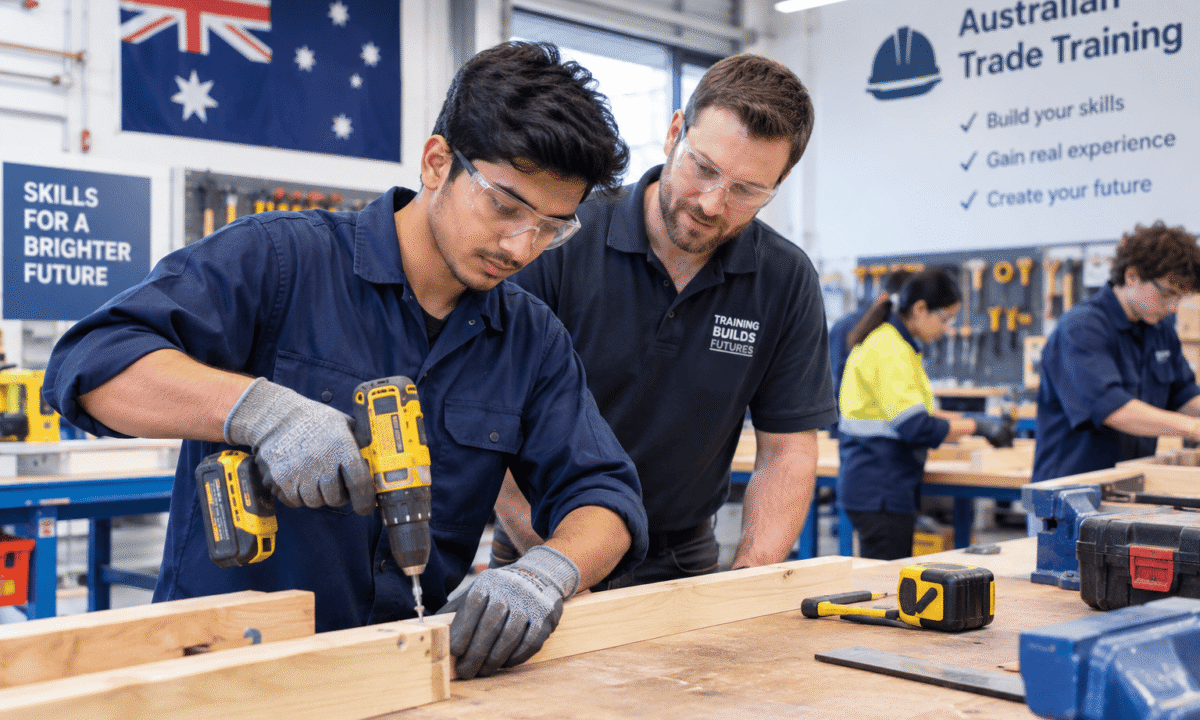
Trade courses in Australia are vocational programs designed to build practical skills for specific occupations. They can be a good option for students who prefer hands-on learning and want to develop skills for industries such as construction, automotive, electrical work, plumbing, hospitality and other trades.
For international students, choosing a course involves more than finding a popular qualification. You should check the course requirements, provider registration, career outcomes and whether the occupation connects with your longer-term plans.
What Is a Trade Course in Australia?
A trade course is generally a vocational education and training (VET) program focused on practical, occupation-specific skills. Australian VET qualifications can include Certificate II, Certificate III, Certificate IV and Diploma-level qualifications.
The exact qualification depends on the occupation and course. The Australian Qualifications Framework provides the national framework for Australian qualifications. Training.gov.au can also be used to check nationally recognised training products and their current status.
Common trade areas include:
- Automotive technology
- Carpentry and joinery
- Electrical trades
- Plumbing
- Painting and decorating
- Wall and floor tiling
- Bricklaying
- Fabrication and mechanical trades
- Commercial cookery
The right choice depends on your interests, previous education, practical ability and career goals.
What Are the Requirements for Trade Courses in Australia?
Entry requirements vary between qualifications and education providers, so there is no single requirement for every trade course.
International students should generally check:
Academic requirements
Some courses require previous schooling or an equivalent qualification. Others may have specific prerequisites or assessment requirements.
English requirements
International students may need to demonstrate English-language proficiency. The required level can vary by provider, qualification and visa circumstances.
Practical and physical requirements
Some trades involve workshops, tools, construction environments or other practical activities. Make sure you understand what the course involves before enrolling.
Provider and course registration
If you plan to study in Australia on a student visa, check that the provider and course are registered for international students through CRICOS. The Australian Government’s CRICOS database lists education providers and courses available to students studying in Australia on student visas.
What Types of Trade Qualifications Can You Study?
Trade qualifications vary depending on the occupation.
You may find Certificate II programs that introduce an industry, Certificate III qualifications that provide occupation-specific trade skills, Certificate IV programs with more advanced or specialised skills, and Diploma-level qualifications for higher-level technical or supervisory roles.
Do not choose a qualification only because its title sounds suitable for migration. Check the occupation connected with the qualification and the current requirements that apply to your intended pathway.
Can Trade Courses Help With a PR Pathway?
A trade qualification can form part of a skilled career and migration plan, but completing a trade course does not automatically lead to permanent residency.
Australia’s skilled migration system considers the nominated occupation, applicable visa requirements, skills assessment, English ability, work experience, points and other eligibility criteria. Different skilled visas also use different occupation lists and requirements.
For some trade occupations, Trades Recognition Australia (TRA) is the relevant skills assessment authority. TRA has different assessment programs depending on the occupation, country of passport, qualifications, experience and visa pathway.
This is why it is better to ask, “Does this qualification fit my intended occupation and pathway?” rather than simply asking which trade course is the best for PR.
How Should International Students Choose a Trade Course?
Start with the occupation rather than the course title.
Consider these five questions:
- What type of work do I actually want to do?
- What qualification is relevant to that occupation?
- Does the provider offer the course to international students?
- What are the entry and practical requirements?
- What skills assessment or licensing requirements may apply later?
You can use CRICOS to verify whether a provider and course are available to international students. You should also check the current qualification information and requirements before applying.
For students considering skilled migration, Home Affairs recommends checking the applicable skilled occupation list and visa requirements rather than assuming that a qualification guarantees eligibility.
What Happens After a Trade Qualification?
Your next steps depend on the occupation, qualification and visa pathway.
Some international graduates may need to consider skills assessment requirements. For eligible international graduates, TRA’s Provisional Skills Assessment can be relevant to the Temporary Graduate visa (subclass 485) Post-Vocational Education Work stream and is also a prerequisite for the Job Ready Program.
TRA’s Job Ready Program is an employment-based assessment for eligible international graduates who have completed an Australian VET qualification and are working in Australia.
These requirements can change, so always check the current government information for your specific occupation and visa.
Choose a Trade Course Based on Your Career Goal
The best trade course is not necessarily the course with the most searches or the strongest migration-related claims.
A better choice is one that matches your interests, abilities, education background and intended occupation while meeting the relevant course and visa requirements.
If you are comparing trade courses in Australia, GrowSmart Education and Migration can help you review course options, providers and potential study pathways before you enrol.
FAQs
What are the requirements for trade courses in Australia?
Requirements vary by qualification and provider. International students should check academic prerequisites, English requirements, course-specific conditions and whether the course is available through a CRICOS-registered provider.
Can international students study trade courses in Australia?
Yes, international students can study eligible VET courses offered by registered providers. The course and provider should be checked through CRICOS before enrolment.
Which trade courses can support a PR pathway?
Some trade qualifications may support a skilled migration plan when they lead to an eligible occupation and the applicant meets the relevant visa and skills assessment requirements. A course alone does not guarantee permanent residency.